Why Should You Be Using Glassfibre Reinforced Concrete in Landscape Design?
Possessing unparalleled weather resistance and aesthetic adaptability, Glassfibre Reinforced Concrete (GRC/GFRC) remains perfectly suited for a range of outdoor applications, facilitating all manners of creative possibilities in landscape design.
The material’s ability to be shaped into a wide variety of shapes and surface finishes allows for designers to create features that mimic materials such as stone or wood whilst reaping the benefits of GRC’s lightweight and resilient characteristics. Moreover, GRC’s green credentials make it a favoured choice for environmentally conscious landscape design.
Read on to learn more about how landscape designers are utilising GRC in their projects and the numerous benefits that this incredible material provides.

Photo Credit: MacT
Where Can GRC Be Used In Landscape Design?
Whatever your landscaping project’s requirements, GRC can offer a welcome solution to meet them with ease thanks to its remarkable properties. The applications of Glassfibre Reinforced Concrete in landscape design can be as varied as a designer is imaginative, such examples of uses of GRC can include:
- Planters & Pots
- Retaining Walls
- Statues & Sculptures
- Architectural Elements
- Outdoor Kitchen Features
- Water Features
- Paving & Stepping Stones
- Outdoor Furniture
But what makes GRC the ideal material for these applications?

Photo Credit: Trinic LLC
Mimic Natural Textures
Able to seamlessly blend with the natural environment surrounding it, GRC’s adaptability makes it the ideal material for landscape design. The material is capable of replicating the appearance of stone, wood, and other organic materials to an incredibly high degree of accuracy.
Designers can form pathways, retaining walls, and decorative elements that have been carefully adapted to match their surroundings, complementing and enhancing the natural beauty of outdoor spaces.
By creating features that blend seamlessly with nature, designers support biophilic design principles, promoting a connection between people and nature.

Photo Credit: GRCA
Design Versatility
GRC’s versatile properties allow it to be shaped and moulded by the will of the designer. From ornate artistic sculptures to tranquil water features, GRC is capable of it all.
GRC can effortlessly assume intricate forms and designs, empowering designers to push creative boundaries in landscaping projects. Whether looking to implement modern, sleek features into a design or more traditional architectural elements, designers can rely on GRC as a material to bring their visions to life.
The material’s unique blend of versatility and durability make it an essential material for landscaping projects, offering unparalleled design flexibility and creative potential, it empowers designers to transform outdoor spaces into stunning and sustainable environments.
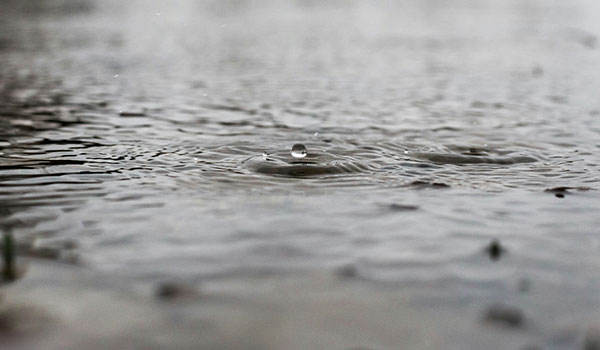
Photo Credit: Nicola Anderson on Unsplash
Durability & Weather Resistance
One standout feature of GRC that marks it as a perfect material for outdoor applications is its’ resilience. Even in the harshest weather conditions, GRC products demonstrate incredible resistance to the elements, maintaining their structural integrity and aesthetic appeal.
The material exhibits resistance to a variety of factors such as:
- Freeze-Thaw Cycles: GRC’s low porosity and dense matrix make it highly resistant to freeze-thaw cycles, preventing damage caused by expansion and contraction of water within the material.
- Chemical Exposure: GRC’s composition can be engineered to resist chemical attack from acids, alkalis, and other corrosive substances, making it suitable for more industrial environments and coast areas.
- UV Radiation: GRC formulations with UV-resistant additives can withstand prolonged exposure to sunlight without degradation, ensuring long-term colour stability and visual appeal.
While conventional concrete may degrade over time, GRC ensures that outdoor structures remain intact whilst reducing maintenance needs and guaranteeing long-term sustainability – just another reason to use Glassfibre Reinforced Concrete in landscape design.
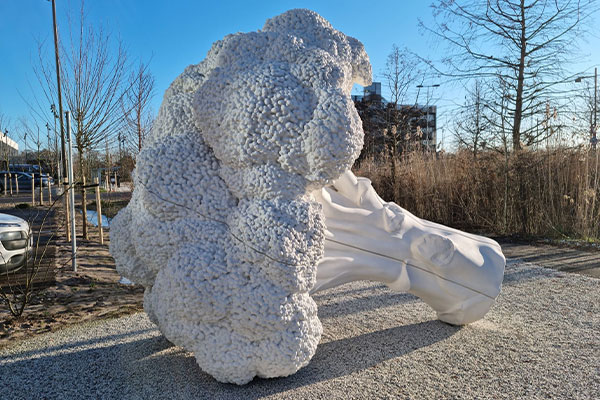
Photo Credit: BB Fiberbeton
Lightweight & Easy Installation
Where weight and installation considerations are paramount, GRC stands out as the most suitable material.
Despite its incredible durable properties, GRC remains remarkably lightweight, demonstrating a mass up to 80% lighter than traditional concrete. This significant reduction in weight simplifies installation of landscape elements, reducing both labour costs and construction time.
Garden sculptures, planters, and outdoor furniture made from GRC can be easily positioned and adjusted without heavy machinery, offering flexibility during the design process.
Moreover, the lighter weight of GRC products can be a significant advantage in circumstances where weight restrictions are in place, an example of this could be the installation of planters on an apartment balcony. In circumstances like this, the ability to use precast, lightweight modular panels facilitates a far more convenient installation process. Additionally, in instances where GRC elements are damaged, the modular system allows for easy movement and replacement.
Got a Question About GRC?
From production equipment to raw materials, we’ve got the knowledge and expertise to answer your GRC enquiry
Sustainable & Environmentally Friendly
The incorporation of GRC into landscape design supports sustainability due to the material’s resource-efficient and environmentally friendly approach to production.
The implementation of AR Glass Fibres means that GRC can attain far greater strength than conventional concrete without the need for larger quantities of cement. Yielding results with 30% greater tensile strength than steel, the use of AR Glass Fibres also negates any requirement for steel rebar reinforcement.
Additionally, across its entire lifecycle, GRC offers remarkable reductions in carbon emissions when compared with its precast concrete equivalent. Studies have shown that GRC can achieve a far lower environmental impact by a factor of as high as 60% by optimising material usage, embracing recycled content, and streamlining production process.
Furthermore, the material’s durability and longevity ensures reduced environmental impact over time, mitigating the need for frequent replacements and associated carbon-intensive activities.
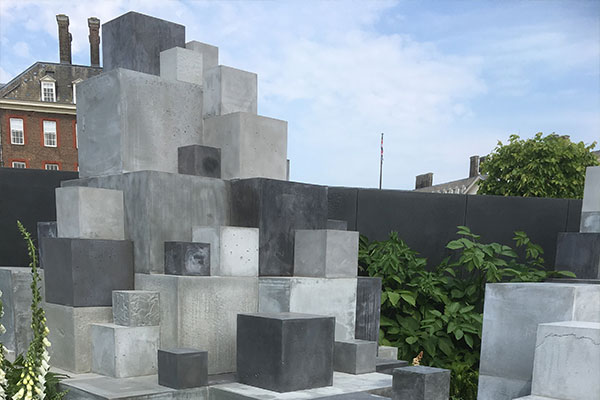
Skin Deep
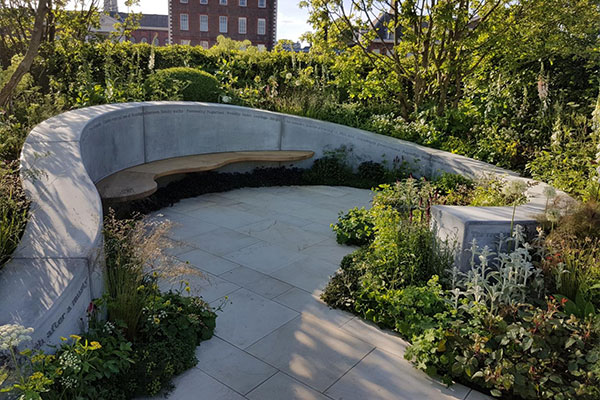
Jo Whiley Scent Garden
Case Study: Chiltern GRC
Time and again, Chiltern GRC have demonstrated the creative possibilities of using Glassfibre Reinforced Concrete in landscape design. The team have worked alongside many award-winning garden designers as well as fabricating their own creative products. From planters, water features, and retaining walls to complex and dramatic entrances, Chiltern GRC have brought even the most challenging landscape designs to life.
Their work at the Chelsea Flower Show serve as stunning examples of the capabilities of GRC in landscape design.
Skin Deep (pictured above, left) was a conceptual garden created for an established UK skincare brand. The GRC blocks were created to represent people with varying skin conditions that we all encounter. Placed as a towering city-scape structure amongst the softness of the ferns and foxgloves, the blocks formed a striking composition.
GRC proved the perfect material for such a project, its’ versatile properties allowing for the Chiltern team to form blocks with varying colours and surface finishes to match the brief of the designer.
Another example of Chiltern’s work at Chelsea Flower Show would be the Jo Whiley Scent Garden (pictured above, right). Here, a meandering garden wall was cast with inscriptions of favourite ‘scent memories’. The wall elegantly flows through the landscape, guiding visitors through the varying scents implemented across the design.
Once again, GRC proved to be the perfect choice for such a project. Its lightweight yet durable nature allowing for easy transportation and installation whilst remaining strong and sturdy enough to remain effective as a retaining wall.
Visit the Chiltern GRC website to learn more about the incredible work they do with Glassfibre Reinforced Concrete:
Conclusion
Glassfibre Reinforced Concrete brings a balance of durability, versatility, and aesthetic potential to landscape design. This unique blend of properties makes GRC perfectly suited to meet the demands of outdoor applications and proves why landscape designers are choosing to incorporate this innovative material into their projects across the globe.
Whether creating robust retaining walls or elegant sculptures, GRC can be relied upon for its abilities to mimic natural textures, withstand environmental stressors, maintain structural integrity, and facilitate easy installation.
When aiming to create beautiful, sustainable, and functional landscape designs, consider using GRC – a material that not only meets practical requirements but also enhances the natural harmony of outdoor environments.
If you’re looking to incorporate GRC into your next landscaping project, get in touch with Power-Sprays. With a wealth of industry knowledge and experience, we can provide you with the equipment you need to bring spectacular GRC elements to life: