
GRC GUIDE
Everything You Need to Know About Glassfibre Reinforced Concrete

Glassfibre Reinforced Concrete can found around the world. Whether it’s called Glass Reinforced Concrete, GRC, GFRC, Composite Ciment Verre, CCV, Fiber Beton, Fiber Takviyeli Beton and Glasfaserbeton – they all mean the same thing:
A concrete composite consisting of a mixture of cement, fine aggregate, water, admixtures and Alkali Resistant Glass Fibre.
Compared to traditional concrete, Glassfibre Reinforced Concrete demonstrates greatly enhanced properties, notably in tensile and flexural strength, durability, insulation and weight reduction. These myriad practical advantages are combined with a unique aesthetic edge, offering creative freedoms that conventional construction materials simply cannot match.


Photo Credit: Fatih Turan



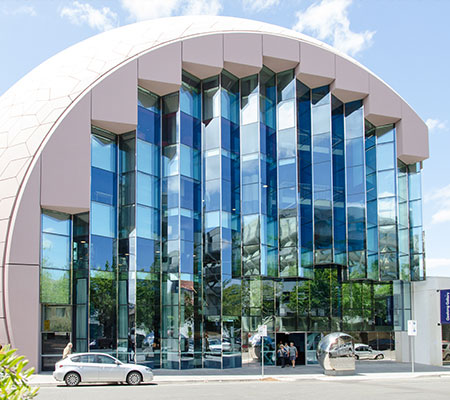
Photo Credit: 'EHB_6331' by yesperhapsno, CC BY 2.0

Photo Credit: Sultan Jafarov
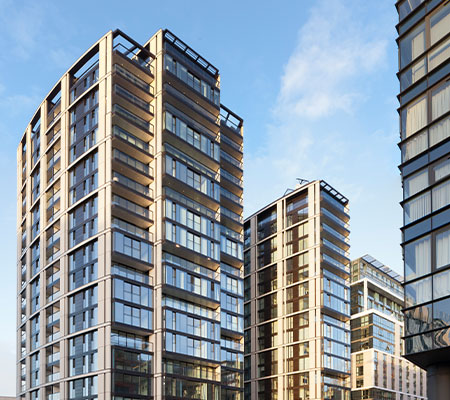
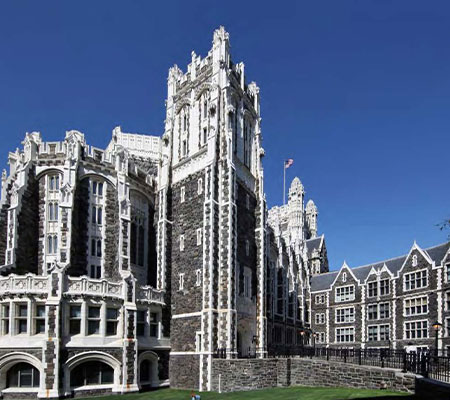


Photo Credit: Ussama Azam on Unsplash

Photo Credit: Petar Avramoski
But First – Why Listen to Us?
Established in 1962, Power-Sprays Limited. started life in the design, development and manufacture of specialist equipment for the pumping and spraying of cementitious composites. With the emergence of Glassfibre Reinforced Concrete in the 1970s, our focus shifted to developing specialist machinery used to produce this remarkable composite.
Over the decades, our machinery has since become the industry standard for GRC production equipment and is used by manufacturers in over 100 countries on some of the world’s most impressive projects.
On this basis, we would like to think of ourselves as experts on all things GRC-related and we hope, after reading through this guide, you’ll think the same too.
Got a Question About GRC?
From production equipment to raw materials, we’ve got the knowledge and expertise to answer your GRC enquiry

A Brief History of GRC
The potential of using glass as a reinforcing agent was realised following the successful reinforcement of polyester resins in the 1930’s. This breakthrough led to speculation into similar applications in cement pastes and concrete, however the glass’ low level of alkali-resistance meant that the fibre quickly degraded when mixed in the highly alkaline environment of concrete, leading to catastrophic loss in tensile strength.
Early research in the Soviet Union investigated the use of special low-alkali cement matrices in creating glass fibre reinforced products. Although this solution showed promise, the fact that this product wasn’t commercially available stunted further progress.
It wasn’t until the 1960’s when a team from the UK Building Research Establishment made a breakthrough by producing the first Alkali-Resistant Fibre. This innovation was quickly followed by commercial development in the 1970’s, making this game-changing fibre widely available and enabling the early expansion of the Glassfibre Reinforced Concrete market.
Development of Glassfibre Reinforced Concrete continued with the introduction of EN Standards and an increased focus on quality control processes by the International Glass Reinforced Concrete Association, leading to the remarkable GRC products that we see being manufactured today.
The Ultimate
GRC GUIDE
Now you know the backstory, it’s time to fill you in on the rest.
In 5 instalments, we’ll take you through everything you need to know about Glassfibre Reinforced Concrete – whether you’re a seasoned GRC production specialist or new to the industry, we’ll cover topics and information that all can benefit from. We’ve even included GRC case studies and a GRC Glossary to help you navigate your way through this guide and fill any gaps in your relating to GRC knowledge.
Click the links below to navigate the guide:
GRC Advantages
Why is GRC a far superior material compared to traditional concrete? Learn the 7 key attributes that put GRC leagues ahead of its conventional counterpart.
GRC Green Credentials
Studies have shown that GRC has a far lower environmental impact by a factor of as high as 60% – what key factors contribute to this remarkable statistic?


