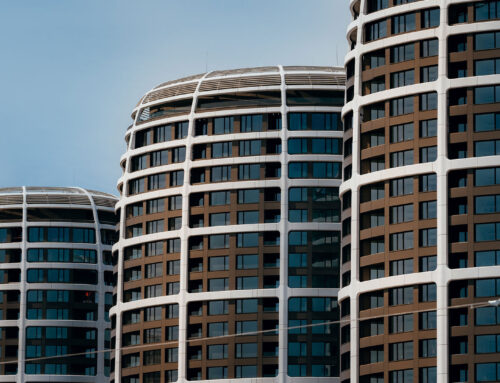
Photo Credit: “EHB_6331” by yesperhapsno, CC BY 2.0
Geelong Library & Heritage Centre
Geelong, Australia
GRC Project Case Study
GRC Project Case Study
Located in the bay-side city of Geelong, Australia, the picturesque Johnstone Park is home to some of the bay-side city’s most historically significant examples of Geelong architecture. Alongside the historic landmarks of Geelong Peace Memorial, Geelong Art Gallery and Geelong Town Hall stands the park’s latest addition: the re-developed Geelong Library & Heritage Centre.
Construction of this $45.5 million project began in December 2013 following years of intense community consultation, analysis and expert planning. The project’s aim was to erect the new library in the existing building’s footprint, replacing it with an expanded, state-of-the-art facility that was aesthetically aligned with the surrounding Geelong architecture and landscape.
Award-winning Melbourne firm, ARM Architecture were responsible for the building’s iconic design which features some remarkable uses of Glassfibre Reinforced Concrete (GRC) that aided in shaping the building’s unique structure and breathed life into some of its most distinct features.

The Dome
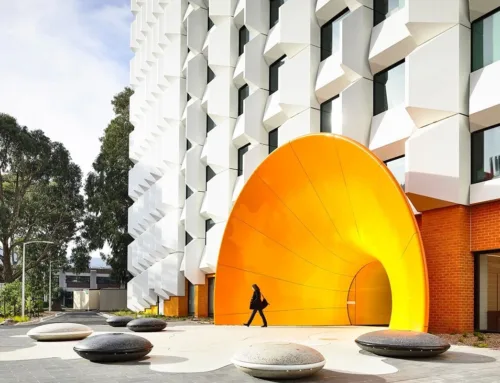
It is likely the eroded geometric dome that remains the most distinct aspect of the Geelong Library & Heritage Centre’s impressive 9 – storey structure. Encapsulating the library within, an elaborate cladding system of convex hexagonal and pentagonal shapes form a series of arches that convey the suggestion of a spherical dome, striking a balance between organic and futuristic forms.
This sphere references the domes of the great reading rooms of the State Library of Victoria and the Library of Congress, paying homage to themes of knowledge and curiosity. Further depth is added to the structure by the dome’s eroded appearance: like a grotto, it opens up the building to the surrounding landscape of the park and invites visitors into its angular alcoves.
To form this central component of the structure’s elaborate structure, the design and construction team elected to use precast Glassfibre Reinforced Concrete panel cladding.
Got a Question About GRC?
From production equipment to raw materials, we’ve got the knowledge and expertise to answer your GRC enquiry
Glassfibre Reinforced Concrete
Adelaide-based Asurco Contracting was responsible for the manufacture of the Geelong Library & Heritage Centre’s GRC elements. The team produced hundreds of asymmetrical and geometrically pentagonal or hexagonal panels off-site in the company’s Royal Park Factory before transporting them to Geelong. 332 panels were used to form the library’s fractured sphere: these were mounted on a secondary steel sub-frame and subsequently bolted to the primary steel structure.
18 different standard hexagonal tiles and one standard pentagram were produced in various sizes of up to 3.5m. These were finished in a palette of four muted browns, chosen to harmonise with the surrounding masonry buildings and graded in a heat-map to accentuate the crest of the dome.
The resulting structure seamlessly blends with the surrounding historical Geelong architecture of Johnstone Park whilst maintaining a unique aesthetic edge of its own.

Photo Credit: “Dark Orb_Geelong Library and Heritage Centre” by Rob Deutscher, CC BY 2.0
Environmental Considerations
Environmental impact was of paramount consideration throughout the construction of the project, maintaining a continued focus on eco-friendly practices and design features that led to the building ultimately becoming 5 Star Green Star-rated.
The various contemporary sustainable mechanisms of the building’s design contributed to its low-energy outcome. It deals efficiently with temperature extremities and generates low-carbon electricity through a large solar array installed on the roof of the Peace Memorial next door and includes other features such as a displacement air system, in-slab floor heating and a water collection & grey water treatment facility in the lower-ground floor.
Whilst these features greatly aided in achieving the building’s sustainability goals, the choice of using GRC as a construction material proved particularly beneficial. The material is notorious for its long-lasting and environmentally friendly attributes, remaining durable and strong throughout its lifespan, negating the need for frequent maintenance and repairs. Moreover, the composite’s ability to be shaped into incredibly thin panels (without affecting performance) enables reductions in material usage and subsequently saves on transport costs due to the reduction in weight.
Conclusion
The Geelong Library & Heritage Centre was opened in late 2015 and has since been hailed as a landmark structure amongst the skyline and cultural landscape of the city of Geelong, resonating as a hub for the local community and a stunning example of Geelong architecture.
Its’ iconic dome has garnered the attention of many admirers, some referring to it as a giant football, others as a big brain – regardless of interpretation, it has sparked conversation amongst the city residents and architects around the world.
The choice of using GRC in the execution of the library’s most unique feature proved both practically and aesthetically advantageous, demonstrating its flexible prowess in meeting a variety of project objectives.
But to manufacture GRC elements that attain peak performance capabilities, you need the right specialist production equipment and raw materials. Between Power-Sprays and Fibre Technologies International, our companies have been working in the GRC industry for over 50 years so we know exactly what it takes to produce high-performance GRC. If you’re looking to get break into this innovative sector of the concrete market or wanting to upgrade your current production operations, get in touch.