Beyond Bridges: Where Can FRP Rebar Be Used?
The Evolution of Concrete Reinforcement
Concrete remains one of the world’s most widely used construction materials due to its strength, durability, and versatility. However, the long-term performance of reinforced concrete is often influenced by the reinforcement embedded within it.
For decades, steel has been the default reinforcement solution, providing the tensile strength that concrete lacks. Whilst highly effective, steel can be susceptible to corrosion when exposed to moisture, chlorides, and aggressive environmental conditions. Over time, this can lead to cracking, spalling, and costly maintenance interventions.
As engineers and asset owners increasingly focus on durability and whole-life performance, Fibre Reinforced Polymer (FRP) rebar is gaining attention as an alternative reinforcement solution. Whilst often associated with major bridge projects, its applications extend far beyond transport infrastructure.
Addressing Durability Challenges in Concrete Construction
Corrosion remains one of the most significant causes of deterioration in reinforced concrete structures. Whether exposed to coastal environments, de-icing salts, chemicals, or persistent moisture, traditional reinforcement can become vulnerable over time.
FRP rebar offers an alternative approach. Manufactured using high-strength fibres embedded within a polymer resin matrix, FRP reinforcement is non-corrosive and lightweight whilst maintaining excellent tensile strength characteristics.
These properties have led to increasing adoption across a variety of sectors where durability, reduced maintenance requirements, and long-term performance are key design considerations.
Key Applications of FRP Rebar
Bridge Infrastructure
Bridge structures are among the most demanding reinforced concrete applications. Exposure to moisture, freeze-thaw cycles, traffic loading, and de-icing salts can create challenging conditions for conventional reinforcement systems.
As a result, FRP rebar is increasingly being specified within bridge decks, barriers, and other concrete elements where corrosion resistance is a priority.
Marine and Coastal Structures
Marine environments present one of the most aggressive conditions for reinforced concrete.
Seawalls, jetties, harbour infrastructure, pontoons, and coastal walkways are continuously exposed to saltwater and airborne chlorides that can accelerate corrosion within traditional steel-reinforced systems.
Because FRP rebar is inherently corrosion resistant, it offers a practical solution for concrete structures operating in these environments. This ability to maintain performance without the risk of rust-related deterioration has made FRP reinforcement increasingly attractive within coastal infrastructure projects.
Project
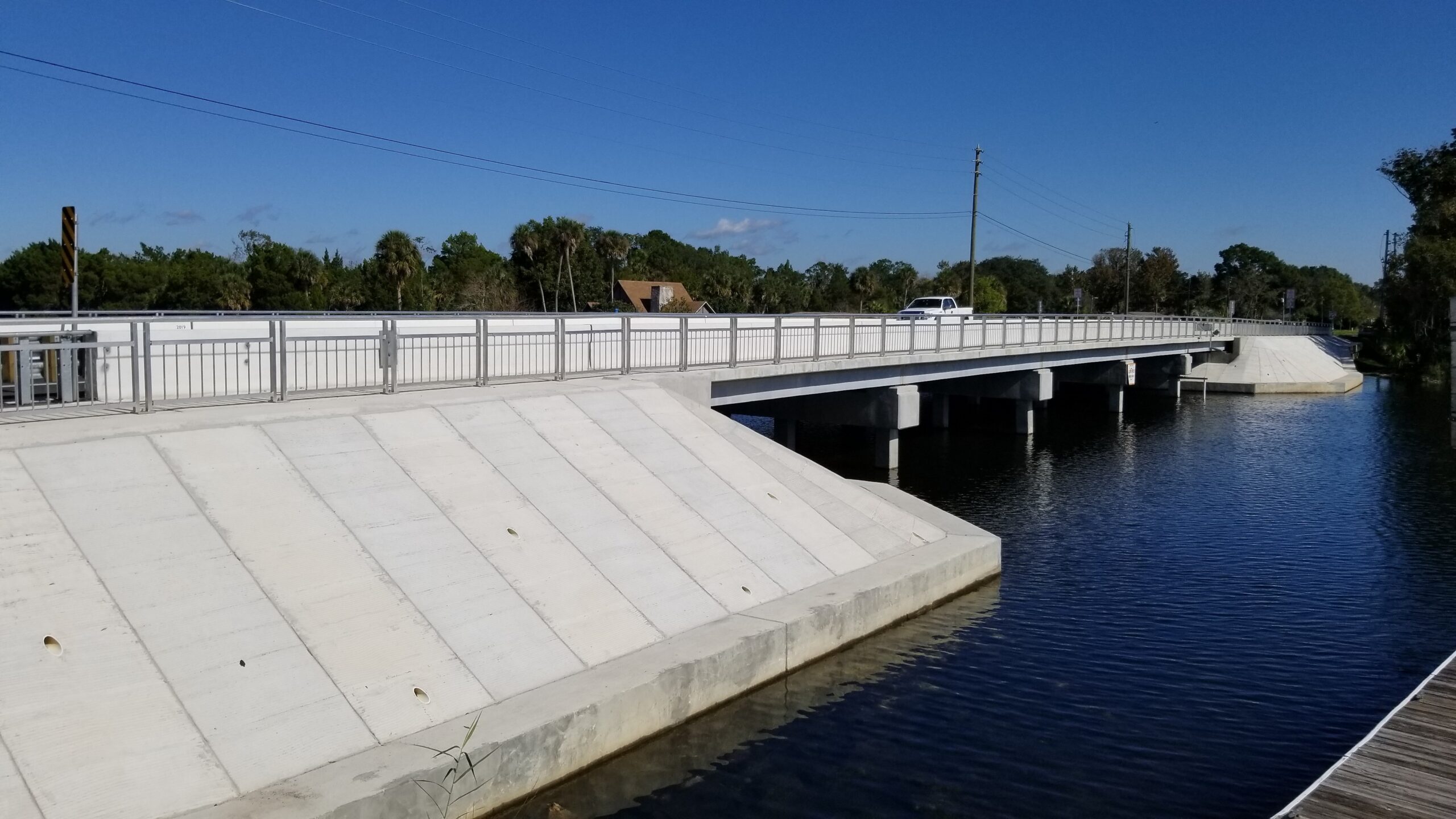
[Image: Courtesy of FDOT]
Halls River Bridge, Florida, USA
The Halls River Bridge replacement project demonstrates how FRP reinforcement can be incorporated into bridge infrastructure exposed to aggressive coastal and marine conditions. Located within a saltwater environment, the project utilised FRP reinforcement within key concrete elements to support durability and help mitigate corrosion-related deterioration, adding 75+ years with minimal maintenance requirements due to high strength and fatigue endurance.
Got a Question About GRC?
From production equipment to raw materials, we’ve got the knowledge and expertise to answer your GRC enquiry
Precast Concrete Products and Manufacturing
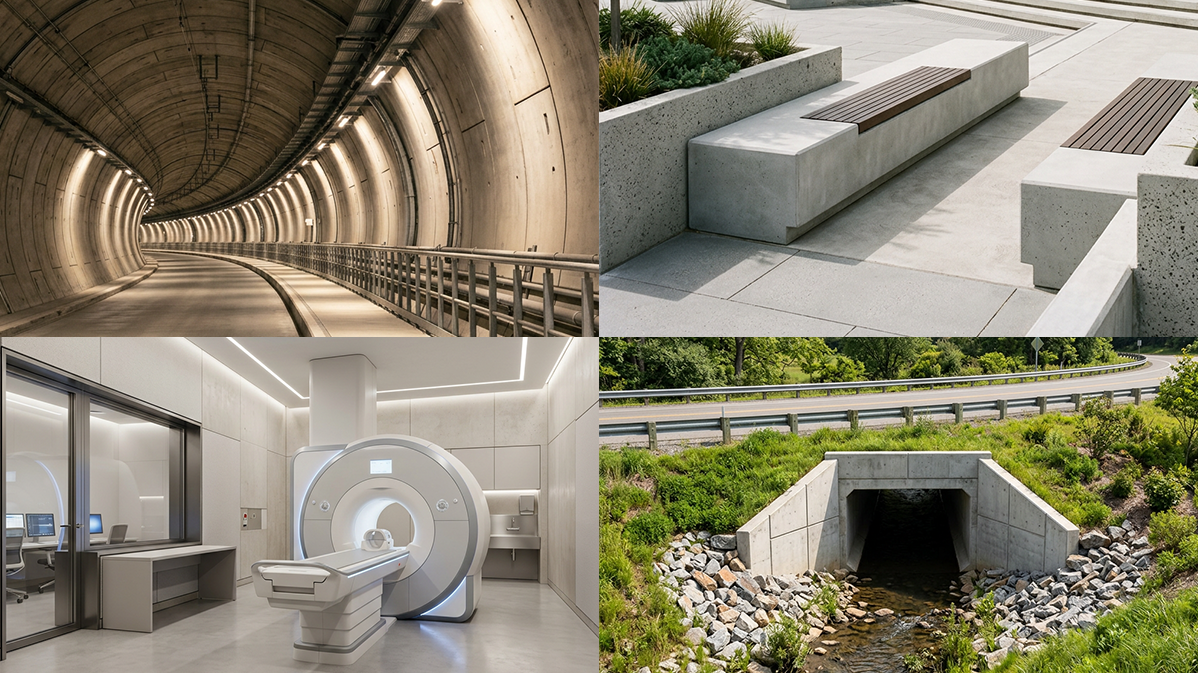
Whilst large infrastructure projects often attract the most attention, FRP rebar is equally suited to precast concrete manufacturing. Precast producers increasingly utilise composite reinforcement in components where long-term durability, moisture resistance, and soil-chemical defence are critical.
The lightweight nature of FRP assists with factory handling and lowers transport shipping weights, whilst its inherent corrosion resistance supports product longevity in challenging environments. Applications can include:
- Drainage channels
- Utility chambers
- Retaining wall units
- Concrete covers and lids
- Modular precast components
This material is highly adaptable across standard precast catalogue items. For example, manufacturers can easily integrate 4mm – 8mm FRP rebar to form tight, high-strength structural cages that will never rust or degrade underground, providing absolute defence in challenging environments.
Project
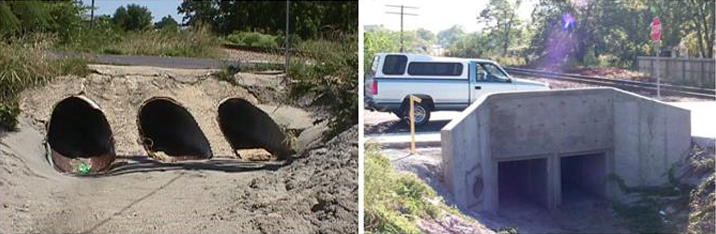
[Image Credit: Omid Gooranorimi/Doug Gremel/John J. Myers/Antonio Nanni – Long-Term Durability of GFRP Internal Reinforcement in Concrete Structures, 2017]
The Walker Avenue Precast Box Culvert, Missouri, USA
The Walker Avenue Precast Box Culvert project demonstrates how 6mm FRP rebars can be seamlessly incorporated into underground utility and drainage infrastructure. Located in a high-moisture subterranean environment, the project utilised non-corrosive FRP mesh and bars within modular precast concrete boxes to handle heavy rainwater runoff and soil chemicals. By replacing traditional steel wire mesh with composite reinforcement, this eliminated the risk of internal rust expansion and concrete splitting, ensuring a long-term, maintenance-free drainage solution with high structural endurance.
Architectural and Landscape Applications
The benefits of FRP reinforcement are not limited to structural and infrastructure projects. Architectural and landscape concrete elements also require durability, particularly where exposure to weathering, moisture, or coastal conditions is expected.
Typically utilising smaller reinforcement diameters ranging from 6mm – 10mm, applications can include:
- Street furniture
- Planters
- Decorative concrete installations
- Public realm features
- Landscape structures
In these environments, reducing the risk of reinforcement corrosion can help preserve both appearance and performance over time.
Durable Concrete for Public Spaces
Public spaces and urban landscapes demand concrete materials that combine long-term aesthetic performance with absolute structural resilience. Whether applied to highly visible surface-level pedestrian areas or major public transit assets operating out of sight, these concrete structures rely heavily on stable, low-maintenance reinforcement grids. From plazas to complex underground transport hubs, FRP reinforcement supports these public requirements by eliminating corrosion concerns – enabling durable concrete installations that safeguard both appearance and structural safety over time.
Project
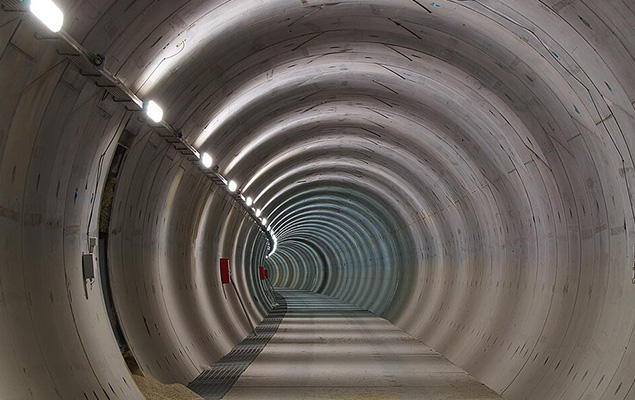
[Image: Exploratory Tunnel Aica–Mules by BBT SE, licensed under CC BY-SA 4.0]
Brenner Mountain Pass, Austria–Italy Border
Brenner Mountain Pass Tunnel project demonstrates how FRP rebars can be incorporated into complex subterranean rail infrastructure exposed to severe electrical and environmental challenges. Located beneath the Alps, the project utilised non-conductive FRP rebar mesh within the bored piles and lower floor walls to create a completely steel-free zone, preventing the penetration of stray induction currents from the adjacent subway tunnel. By replacing traditional steel with 8mm FRP rebars across a 6,400 m² reinforced area, this eliminated the risk of internal corrosion and concrete cracking, ensuring a highly durable, low-maintenance foundation with exceptional structural endurance.
Specialist Industrial Applications
Because FRP rebar is completely non-conductive and magnetically transparent, its structural benefits extend into highly specialised industrial and medical environments where traditional steel is entirely unusable.
Healthcare & Research Facilities
MRI Suites: Because FRP rebar is electromagnetically neutral and radio-transparent, it is used in the concrete walls, floors, and equipment foundations of MRI rooms to prevent distortion of magnetic fields and image artifacts.
Sensitive Laboratories: Prevents electromagnetic interference (EMI) in buildings housing highly precise scientific instruments or electronic research.
Chemical Processing & Heavy Industry
Smelting Plants: Aluminium and copper smelting facilities use FRP rebar to eliminate the risk of induced electrical currents, magnetic interference, and subsequent concrete spalling.
Steel Furnaces & Induction Plants: High-voltage industrial smelting processes create massive electromagnetic induction fields. Traditional steel rebar embedded in surrounding foundations will rapidly heat up from these fields, causing the concrete to expand, crack, and fail. Non-conductive composite rebar completely eliminates this thermal risk, ensuring long-term structural stability.
Chemical & Fertilizer Plants: FRP rebar replaces steel in the concrete foundations, containment dikes, and floor slabs because it is completely immune to highly corrosive acids, alkalis, and salts. This eliminates the need for expensive chemical-resistant coatings and prevents catastrophic structural degradation.
Utilities & Energy
Power Substations: FRP rebar is used to reinforce the concrete pads beneath transformers, switchgear, and battery storage units. Because FRP is entirely non-conductive and non-magnetic, it eliminates electrical hazards, prevents electromagnetic interference (EMI), and ensures the concrete remains structurally sound.
Cooling Towers: FRP rebar is cast inside the concrete basins, columns, and structural shells of cooling towers. The composite material cannot rust, allowing the concrete to maintain its structural integrity despite perpetual water exposure and extreme temperature swings.
Conclusion
Whilst bridge projects frequently demonstrate the capabilities of FRP rebar in demanding environments, the material’s potential extends far beyond standard transport infrastructure.
From precast manufacturing and architectural installations to high-tech medical suites and heavy industrial facilities, FRP reinforcement is helping engineers, designers, and manufacturers eliminate corrosion, prevent thermal cracking, and negate electromagnetic interference. As the construction industry continues to prioritise resilience, technological compatibility, and whole-life performance, FRP rebar is set to play an increasingly vital role across an incredibly diverse range of modern concrete applications.
Looking for Premium Concrete Reinforcement Solutions?
To produce high-performance concrete elements, engineers and manufacturers require high-performance materials. That’s where we come in. Through our associate company Fibre Technologies, we supply top-quality FRP rebars designed to replace traditional steel and deliver maximum longevity across demanding civil, precast, and industrial projects.
If you are looking to eliminate corrosion, prevent electromagnetic interference, and dramatically increase the service life of your next build with their premium FRP rebar range, get in touch with get in touch today or explore their products.