How to Perform a Concrete Slump Test
The Slump Test is a simple procedure carried out to determine the consistency of a fresh concrete mix. It’s used for a wide variety of cementitious products but is particularly beneficial for the production of Glassfibre Reinforced Concrete (GRC).
By routinely following the test, manufacturers can accurately measure the workability of each batch and identify any potential defects in the mix. Subsequent amendments can be made, ensuring consistent quality and strength across all batches.

Apparatus
Only a few pieces of apparatus are required to perform a Slump Test:
- Aluminium tube/cylinder
- Plexiglass target plate
- Trowel or spatula
(Want a Slump Test kit? We can supply….)
Procedure
The procedure for carrying out a Slump Test is as follows:
- Place the tube centrally on the target plate
- Fill with slurry* – if necessary, air bubbles are expelled by gently rodding the mix
- Screed the slurry top and level with the edge of the spatula. Clean any excess slurry from the plate with a damp cloth
- Lift the tube vertically off the plate in a slow continuous motion, allowing the slurry to flow over the target area of the concentric circle
- Measure the slump by the number of rings covered by the slurry. Given standard formulations, 2-3 rings is the normal range to be aimed for depending on the relevant ambient temperatures
* For Premix GRC, test the slurry before the addition of fibres
Attaining Workability
One of the key factors in forming a more workable mix without making concessions in strength is the use of chemical admixtures.
Increasing the water content may aid with the concrete’s flow but will result in a product that demonstrates poor strength. Introducing more cement may counterbalance this issue but would be a very resource-inefficient methodology to follow.
The solution is to incorporate admixtures, such as Superplasticiser, into the mix design. Superplasticising products, like Flowaid SCC, aid in the workability of concrete mixes whilst enabling large reductions in water content of up to 30%. This reduction results in the formation of concrete products that attain significantly improved strengths.
You can find our range of Superplasticisers on the Fibre Technologies website, click here.
Got a Question About GRC?
From production equipment to raw materials, we’ve got the knowledge and expertise to answer your GRC enquiry
Conclusion
Regularly carrying out Slump Tests is an integral part of the concrete mixing process and is beneficial in ensuring that products demonstrate consistent strengths. By measuring workability and adjusting flow using chemical admixtures, manufacturers can far improve the quality of their concrete mixes.
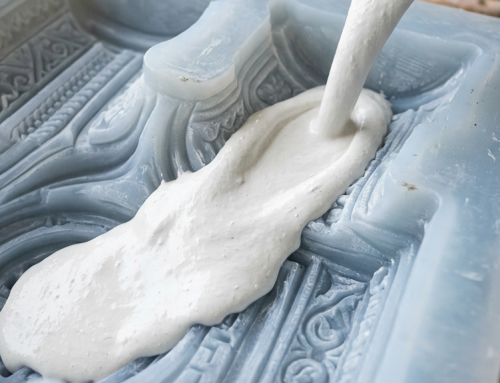
Forming a workable slurry is particularly important for the production of certain cementitious products such as Glassfibre Reinforced Concrete. The production of GRC involves the spraying or pouring of a cementitious slurry mixed with AR Glass Fibre onto a mould, which is why it’s crucial to use a mix that remains workable enough for either methodology.
It just so happens that GRC is our speciality, having been working with the material for over 50 years. Between Power-Sprays and our associate company, Fibre Technologies, we’ve been supplying GRC materials and equipment to manufacturers around the globe, helping them produce high-performance products.
If you’re interested in learning more about you can utilise GRC and get involved in this innovative sector of the concrete market, we’re always here to offer advice or consultation. Send us an email or call us via: info@power-sprays.co.uk & 0117 982 0067
You can view our range of GRC equipment and materials by clicking the links below: