Everything You Need To Know About The Bag and Bucket Tests
GRC Quality Control Series
Glassfibre Reinforced Concrete is a remarkable and complex composite capable of attaining incredible strengths and demonstrating astounding longevity. In fact, properly designed, manufactured and installed GRC products can expect a service life well in excess of 80 years. However, this exceptional lifespan is heavily reliant on following best practices in quality control throughout the production process.
Years of research and development in the GRC industry have led to a carefully determined set of guidelines that can be followed by manufacturers in order to produce GRC products that achieve the best performance capabilities.
To help those new to the industry understand the quality control processes followed by the world’s top GRC specialists, we’ve published a series on the different processes involved. We’ll be focusing on the ‘Bag and Bucket Test’ in this instalment of the series.

Introduction
Prior to production, the Spray Equipment should be ‘calibrated’ to ensure that the outputs of slurry and chopped glass fibre are consistent with the required glass percentage. The calibration is carried out by using 2 simple tests, known as the Bag and Bucket Tests. Once calibration is complete, spraying can begin.
The test method and typical calibration chart are detailed below…
Got a Question About GRC?
From production equipment to raw materials, we’ve got the knowledge and expertise to answer your GRC enquiry
Bag and Bucket Calibration Tables For 5%
Glass Output
| g/15 sec | kg/min |
|---|---|
| 132.0 | 0.526 |
| 145.0 | 0.580 |
| *158.0 | 0.631 |
| 171.0 | 0.684 |
| 184.0 | 0.737 |
| 197.0 | 0.789 |
*Normal output for Concentric Gun
Slurry Output
| kg/30 sec | kg/min |
|---|---|
| 5.00 | 10.00 |
| 5.50 | 11.00 |
| 6.00 | 12.00 |
| 6.50 | 13.00 |
| 7.00 | 14.00 |
| 7.50 | 15.00 |
The Bag Test
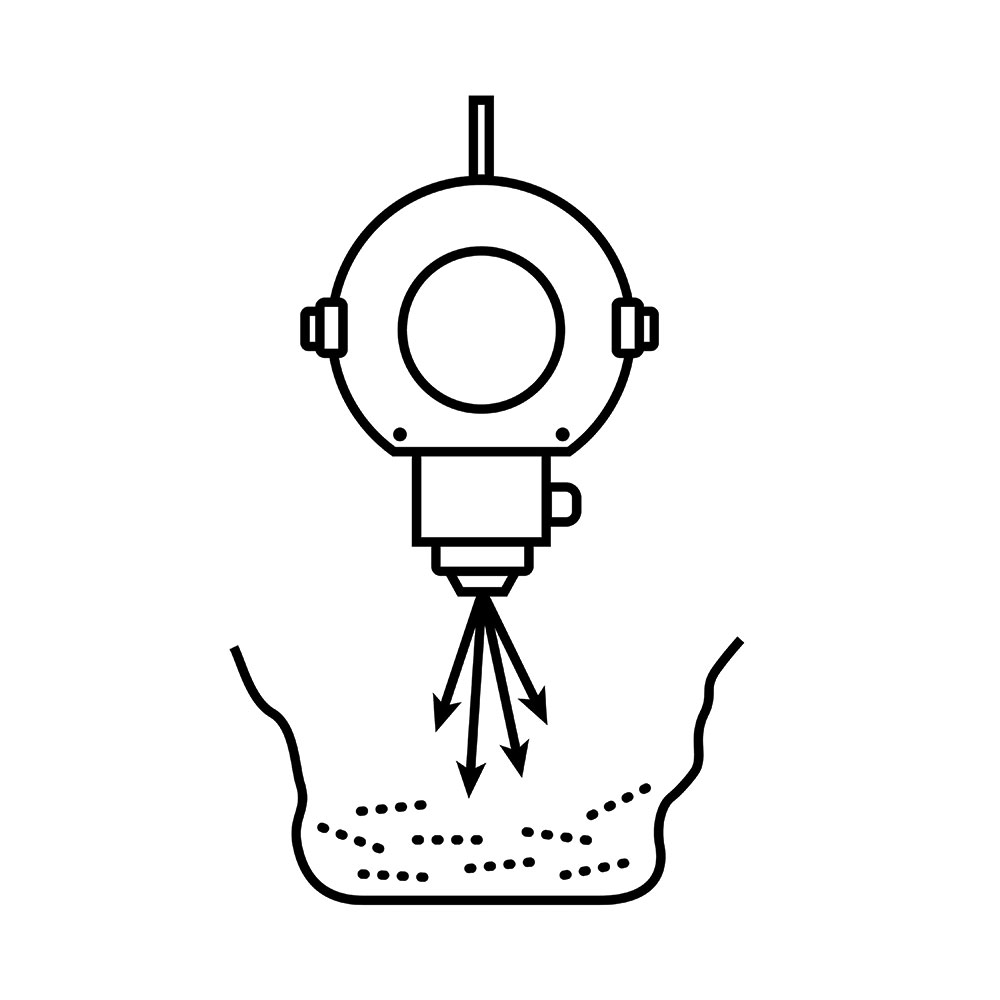
The object of this test is to measure the output of glass fibre
- Weigh bag empty (M) g
- Chop glass into bag for 15 seconds
- Weigh bag with fibre – (T) g
- Calculate output of glass from (T – M) x 4 g/min
- Adjust air to chopper motor to achieve required output

The Bucket Test
The object of this test is to measure the output from the slurry spray
- Weigh the empty bucket (M) Kg
- Spray the slurry into the bucket for 30 seconds
- Weigh the bucket with the slurry (D) Kg
- Calculate the output of the slurry pump from (D – M) x 2 Kg/min
- Adjust the pump output until required rate is achieved
The results of the tests can be recorded in a table such as this one…
| Team No. |
Glass Output per 15 secs Glass Output x 2 = per 30 secs |
Slurry Output per 30 secs | Glass Content % |
|---|---|---|---|
The Future of GRC Spray Calibration
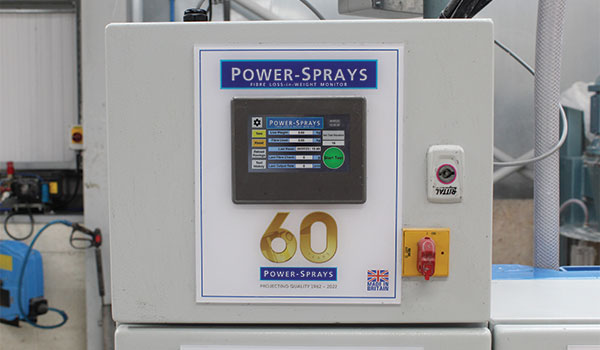
Whilst Bucket Tests remain a necessary step in the spray calibration process, Bag Tests are soon going to become a thing of the past. We’re always looking for new ways to innovate the GRC production process and the Loss-In-Weight Monitoring System is no exception.
This piece of equipment can be easily installed onto your GRC Spray Station from where it can measure, monitor, and maintain your fibre usage – eliminating the need for wasteful Bag Tests. Simply set your test duration on the user-friendly interface and precisely track your fibre usage – saving time and materials and allowing for accurate fibre dispensing during spraying operations.
If this innovative and resource-efficient approach sounds beneficial to your GRC production process, contact Power-Sprays for more information on the LIW Monitor.