The Benefits of Advanced GFRC Equipment Explained
Improve Efficiency, Reduce Costs, Enhance Quality
The production of Glassfibre Reinforced Concrete (GFRC/GRC) has historically been a time-consuming and labour-intensive process which can be significantly affected by labour shortages and ever-changing health & safety regulations. Even to this day, much of the industry suffers from the inefficiencies of traditional GFRC production techniques:
- When mixing, raw materials are typically manually loaded
- When casting, material is often poured from jugs or mixing vessels
- The sprayed process is inherently labour-intensive as it requires a skilled operator
Advancements in GFRC equipment have worked to streamline these inefficient processes, greatly benefiting GFRC manufacturers by reducing the dependency on manual labour, thus increasing efficiency whilst lowering costs and minimising health & safety risks for workers.
Batching and Mixing of GFRC
With a traditional mixer and no dosing equipment, the typical mixing process is as follows:
- Liquids are measured and added to the mixer
- Dry materials may need to be weighed manually. Typically, it is preferable to buy pre-bagged sand and cement but in some parts of the world this is not possible or economical
- After starting the mixer, the dry materials are lifted and emptied into the mixing vessel
- Once mixing is complete, the mix will need to be moved to the spray station/mould and discharged manually
This long-winded and labour-intensive process can be streamlined significantly by using advanced GFRC equipment and modern batching equipment, reducing much of the manual labour typically involved.
The first step can be vastly improved by a liquid dosing system which eliminates human error and saves time when measuring liquids. A dry material batching plant offers the same benefits and more – particularly in the second and third steps – by eliminating the manual handling of materials, significantly reducing the amount of dust (in systems which are integrated with mixers) and, in many countries, saves money on raw materials as manufacturers can buy sand and cement in bulk at a cheaper rate.
Further benefits of using a batching system become apparent when factoring in its ability to batch materials in exact quantities, leading to improved consistency and quality. Materials can also be pre-weighed and discharged directly into the mixer in seconds, significantly reducing the overall mixing time. Moreover, tailored batch sizes (e.g. 75%, 80% of a standard mix) can be programmed, significantly reducing the amount of remaining mix left at the end of a shift/product and improving overall material efficiency.
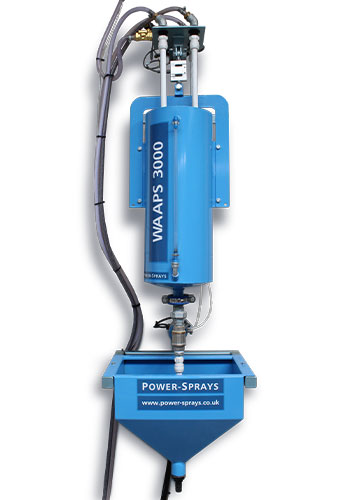
Figure 1: The WAAPS 3000 is an example of a liquid dosing system
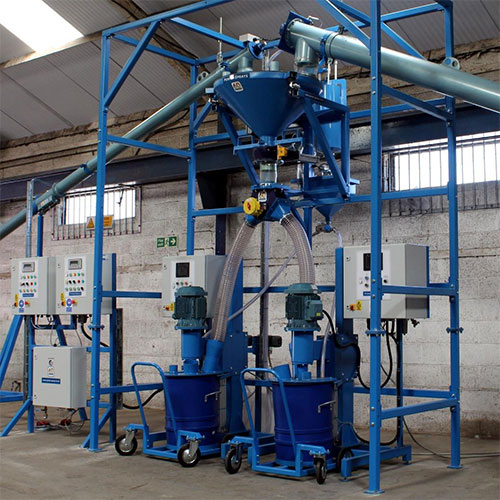
Figure 2: A complete batching plant, incorporating liquid and dry material dosing, feeding two mixers. It is also possible to automate the dosing of fibres
An analysis of a recently installed batching plant in Europe found that the slurry production had increased by over 40% whilst decreasing worker costs. There was also a noticeable increase in the consistency of the mixes as well as a reduction in the waste resulting from rejected mixes.
See the table below, an analysis comparing hand-fed and batching plant-fed mixers in a GFRC factory in Europe:
| Hand-Fed Mixer | Batching Plant Fed Mixer | |
|---|---|---|
| Output per day (tonnes) | 6.36 | 9.09 |
| Staff to manually weigh and load raw materials | 2 | 0 |
| Mixer Operators | 1 | 1 |
| Quality Control Staff | 2 | 1 |
| Raw material losses during production | 5% | 2% |
| Slurry quality | Less stable, slump varied due to human error | More stable, consistent slump |
Using this analysis, a cost comparison of producing slurry is shown in Figure 3 based on the following estimates for labour costs in major GFRC-producing regions of the world*:
- West Europe/North America/Australasia: $35/hr
- East Europe: $13/hr
- Middle East: $7/hr
- Far East: $3/hr
*These estimates were accurate as of January 2023, current costs may vary

Figure 3: Comparison of production costs by region and material dosing method
Based on this data, Figure 4 shows the payback period for two types of plant:
- Compact Batching Plant, using bulk bag dischargers or 1-tonne hoppers, approx. $80,000 investment
- Large Batching plant, including silos, approx. $350,000* investment
*The actual cost of this type of batching plant varies considerably depending on the exact specification. Local costs of silos and installation can also vary.
Across all regions, the payback time on a Compact Batching Plant is much quicker than a Large Batching Plant, primarily due to the cost of installing silos. However, for larger output factories this may still be the best option.

Figure 4: Amount of GFRC production required (tonnes) to pay back a batching plant
Automated Quality Control
European Standard EN 1170-3 specifies that the outputs of slurry and fibre should be recorded and compared in order to determine the percentage of fibre present in GFRC. Typically, this is carried out according to the GRCA Methods of Testing Part 4 – more commonly referred to as the ‘bag and bucket tests’, which are performed at the beginning of each shift for every spray station in use.
Whilst these tests are considered essential for quality control, they are time-consuming and prone to human error, requiring precise timing with a stopwatch to correctly measure the outputs.
Advancements in Power-Sprays GFRC equipment have worked to improve this process. The first of these advancements was to integrate automation into our spray stations which addresses the inefficiencies of the testing procedure: reducing reliance on manual timing and eliminating human error.
- For the bucket test, a dedicated button activates an LED that stays illuminated for precisely 30 seconds, allowing the operator to fill the bucket without having to keep an eye on the time (or relying on another worker for this)
- For the bag test, a ‘Test Mode’ can be activated for chopping the fibre which cuts the air supply to the air motor. Once the ‘Start Test’ button is pressed, an air valve opens for exactly 15 seconds while the operator pulls the air motor trigger and chops fibre into a bag
Whilst these advancements are a significant improvement compared to the traditional test methodology, they still take time and can only be performed while production is paused. Additionally, in some instances, the outputs can vary throughout the day due to changes in temperature, humidity, etc.
For these reasons, we decided to go one step further…
Got a Question About GRC?
From production equipment to raw materials, we’ve got the knowledge and expertise to answer your GRC enquiry
The Fibre Loss-In-Weight (LIW) Monitoring System
This new system completely rethinks how fibre output is verified. Rather than relying on periodic manual tests, the Fibre Loss-In-Weight (LIW) Monitoring System measures fibre output directly from the roving – in real time – without halting production, transitioning quality control from a bottleneck to a seamless part of the production process.
Fibre is no longer ‘wasted’ being chopped solely for the bag test and time is saved by carrying out the procedure during production. Moreover, the System provides confirmation that the fibre output is correct, providing real-time feedback, allowing for adjustments to be made before the quality of the GFRC is adversely affected.
The Fibre LIW Monitoring System also records a running total of the quantity of fibre used – enabling the user to calculate waste and the true cost of the fibre used. This running total can be reset at any time whether at once per shift, per project or per day.

Figure 5: Pneumatic control panel on a modern Power-Sprays spray station showing the automated functions for bag and bucket tests

Figure 6: Prototype fibre output monitoring system – with the press of a button the current output of fibre (kg/min) will be given
Automated Spray Systems
With recent innovations in robotics, there has been a growing interest in incorporating these systems into modern GFRC equipment in an effort to streamline the GFRC spray process. There has been some development in several universities with varying success; however, there remains several obstacles in the way of further progress.
The main challenges at present are the need to manually compact the GFRC with spring rollers and the programming time required for directing the robot. These obstacles mean that there is currently a very limited number of applications where automated spraying of GFRC would be economically viable.
However, as robotic systems continue to improve along with the exponential growth in the abilities of AI (Artificial Intelligence) systems, it’s likely that new, more viable in-roads will be made in using robotics for GFRC spray applications.
Conclusion
Automation technologies are advancing at an unprecedented rate, causing exponential change across industries. Yet, as has historically been the case, the construction industry remains relatively slow in adopting these modern technologies.
The GFRC industry risks falling behind if it follows this hesitant trajectory – it’s more essential than ever to take advantage of new advanced production technologies and automated systems to remain competitive with alternative products.
With advanced production technologies, GFRC manufacturers can streamline the entire production process by increasing automation and efficiency. For over 50 years, Power-Sprays has been the leader of these advanced production technologies: engineering GFRC equipment that is used by the world’s top GFRC manufacturers, helping them streamline production.
If you’re interested in learning more about our range, visit our website or get in touch at info@power-sprays.co.uk