Monument Park
Melbourne, Australia
GRC Project Case Study
GRC Project Case Study
A vast unfurled concrete carpet sprawls across the New Quay promenade of Melbourne’s docklands, populated by the emerging ghostly forms of figures, draped in concrete cloth, cleaved and excised to reveal bursts of vibrant colour from within their crystalline fissures. The otherwise light and dark grey tones of the surrounding topography is perforated by swathes of abundant Australian flora, colonising the artificial landscape, forming a rich spatial and textural composition.
This phenomenal blend of art and landscape design is Monument Park: the focal point of Melbourne’s revitalisation of the New Quay docklands area.
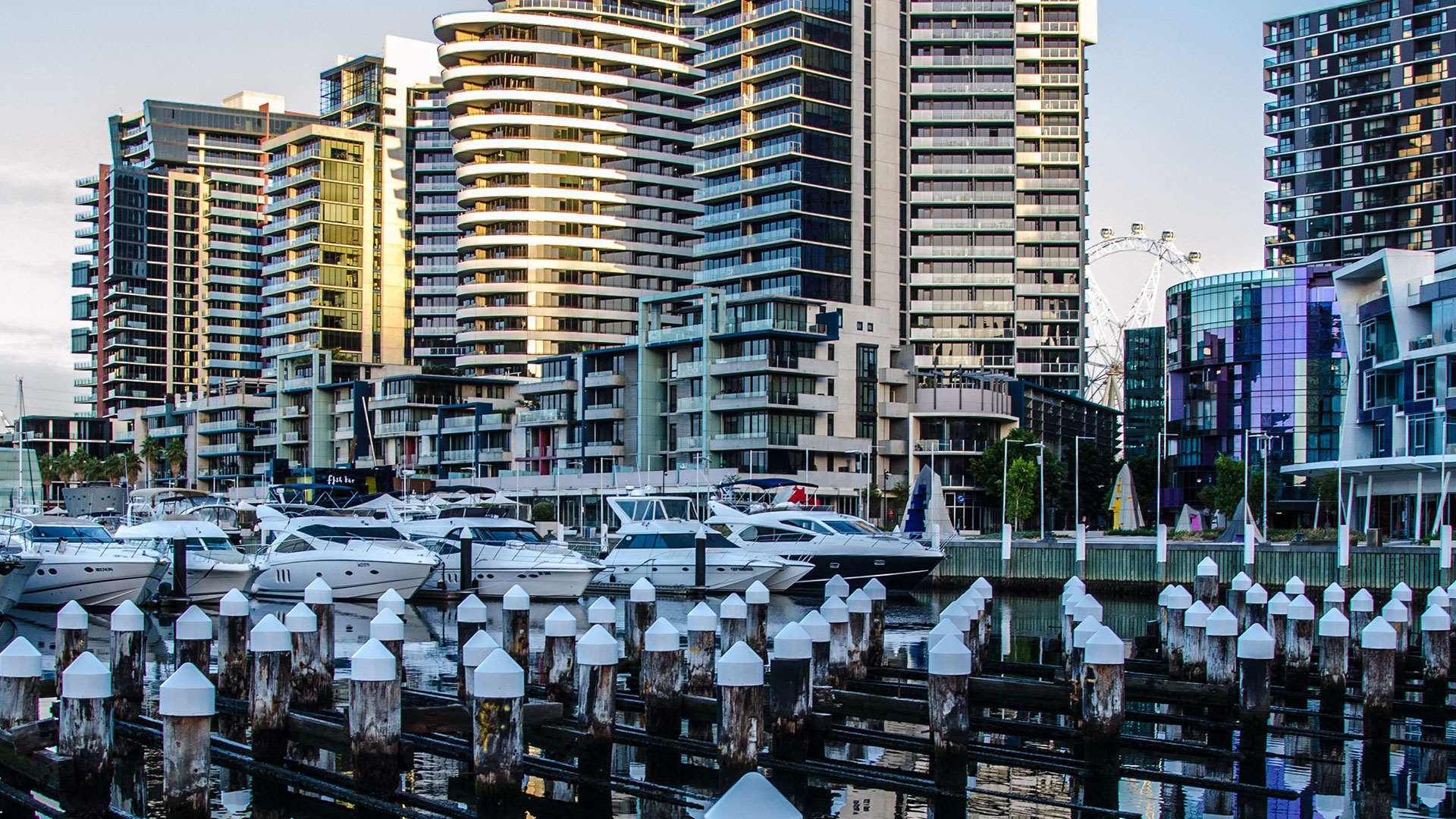
The recurring motif of twenty-first century city urban design seems to be the dockland redevelopment; transforming these dilapidated, post-industrial areas into vibrant community hubs populated with residencies, retail outlets and office spaces. Melbourne’s own attempt at revitalising the city’s docklands area is a stunning achievement, establishing the location as a natural extension of the city and an integral component of its cultural identity rather than an isolated precinct.
Project Outline
Monument Park was a monumental collaborative effort involving MAB Corporation, artist Callum Morton, curator Charlotte Day, McBride Charles Ryan Architects, Oculus Landscape Architects, Rickard Engineering, GRC Environments, City of Melbourne and Places Victoria.
This cross between a sculpture garden and public park would lie in the 2000m² space between the New Quay Promenade and ‘The Quays’ apartments, acting as a place for the community to congregate – sitting, sheltering or playing. The installation would be ever-evolving, its dynamism achieved through an infusion of landscaping and art, changing with the seasons and encouraging interaction beyond observation.
The Vision
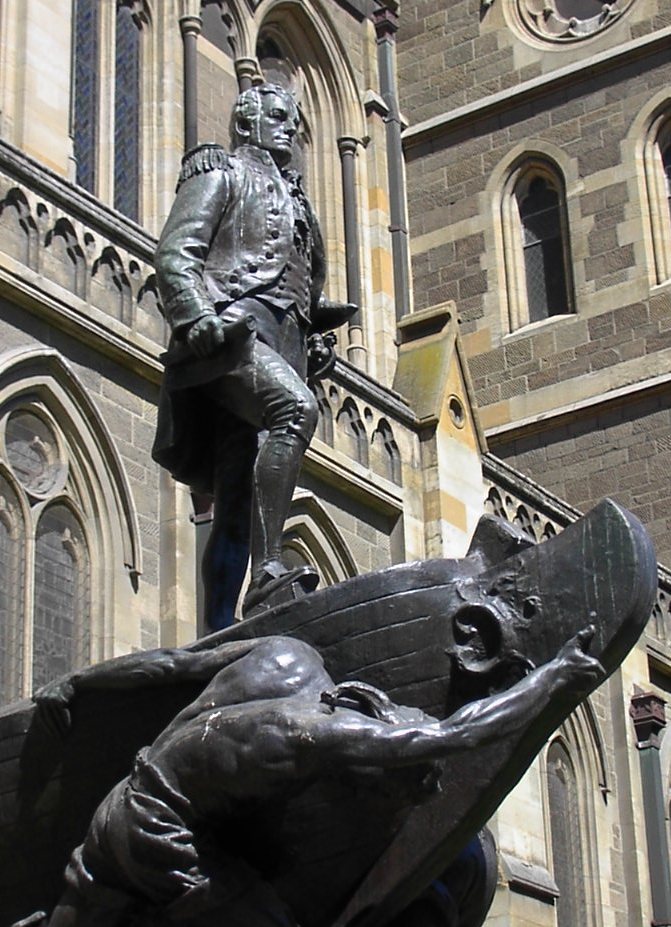
When developing the project’s concept, artist, Callum Morton, sourced inspiration from the existing monuments scattered throughout the Melbourne CBD. Seven sculptures were selected – including those of Captain Matthew Flinders, Burke & Wills and Sir Douglas & Lady Gladys – and draped in sheets. Morton then captured these ghostly forms through 3D scanning.
‘Ghostly’ is an appropriate adjective to describe the appearance of these figures considering Morton’s intention to ‘bury’ the original forms of the monuments, merely representing the essence of the sculptures, intending to form a connection to Melbourne CBD, whilst capturing their spirits in entirely new abstract interpretations.
Further emphasising Monument Park’s links to the City of Melbourne, references to the city’s nucleus – the Hoddle grid – are woven throughout the installation, depicted as a latticework of light and dark concrete roads and paths.
Constructing the Sculptures
Due to the limited load capacity of the wharf, traditional concrete was considered an unfeasible material to form the Monument Park installation. A more appropriate composite was selected instead – Glassfibre Reinforced Concrete (GRC) – which could be formed into thin profiles, achieving significant reductions in weight without compromising on structural integrity.
The 3D scans of the sculptures were digitally broken into components of manageable sizes for fabrication and transportation and brought to life by shaping large portions of polystyrene using 3D CNC router technology.
These polystyrene cores were then sprayed with GRC using a robot specifically imported to Australia for the project, producing a series of lightweight, thin-profile components which were finished and detailed by hand before being transported and fused on-site as hollow forms.
Got a Question About GRC?
From production equipment to raw materials, we’ve got the knowledge and expertise to answer your GRC enquiry
Conclusion
We often talk about GRC’s uses in architecture – forming rich, articulated facades, impeccably restoring heritage buildings, crafting intricate architectural details – but that’s not to suggest that the material isn’t equally appropriate as an artistic medium. Monument Park is a defining example of this.
The project’s immaculate, smooth surface finishes, flawless colour consistency, reduction in weight and hollow profiles – all made possible with Glassfibre Reinforced Concrete.
Producing this remarkable composite doesn’t have to be a challenge – with the right production equipment and raw materials, anything is possible. For over 50 years, we’ve been manufacturing specialist equipment for the production of GRC. Used by the world’s top GRC manufacturers in over 100 countries, when it comes to GRC production, there’s no substitute for Power-Sprays’ equipment.
Get in touch via the form or click the links below to find out more.