Photo Credit: Petar Avramoski
GRC Project Case Study
The Atlantis Hotel
The Palm, Dubai
Constructing a building that captures attention is no small feat in a place such as Dubai, where there seems to be an architectural spectacle around every corner. Yet the teams behind the Atlantis Hotel construction found a way to make their mark.
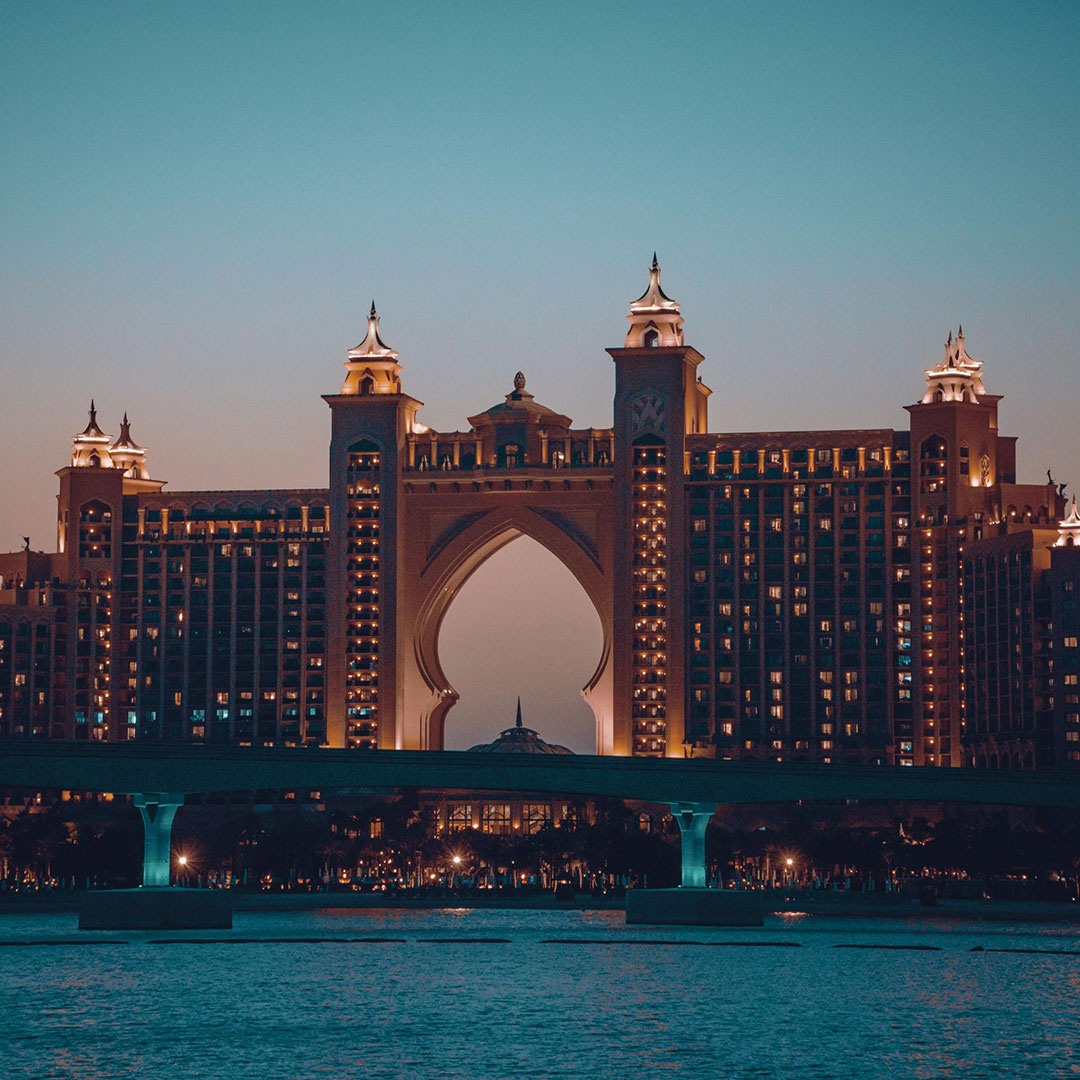
Inspired by its namesake, this luxury 5-star hotel is built in colossal proportions, spanning the apex of the man-made Palm Island’s crescent, standing 23 storeys tall and comprising of 1,539 rooms. The structure consists of two main towers, referred to as East and West, linked by a bridge. A highly decorative and complex arch feature lies beneath, standing approximately 65m tall with a 40m wide base.
Further in keeping with the Atlantis theme, a 17-hectare nautical-themed water park and tropical gardens were constructed for the resort, containing more than 250,000 plants and trees, alongside a gargantuan open-air marine habitat, housing approximately 65,000 marine animals in lagoons and other displays. Even the décor embodies the legend of Atlantis, featuring semi-precious stones, intricate fossilised shells and ‘fish’ stones throughout the building’s expansive interior.
Project Outline
The Atlantis was developed as a joint venture between Kerzner International Holdings Ltd. and Istithmar. Luxury hotel complex design specialists Wimberly, Tong and Goo were called in to design the resort, based on an intriguing brief: capture the essence of Atlantis (a legendary fictional island described by Plato). It was contractors Laing O’Rourke that were tasked with the construction phase of the project.
For Laing O’Rourke, efficiency was paramount and with a peak workforce of 10,000 personnel, working a total of two million hours per month over a period of 31 months, the Atlantis Hotel construction was carried out at a bracing pace – not, however, without its fair share of logistic challenges.
Logistic Challenges
An intricate design of such colossal proportions presented a logistical conundrum in facilitating the build, requiring a highly complex operation consisting of road deliveries, handling and distribution, temporary utilities, communication systems, traffic management and an enormous amount of on-site labour.
To further expedite the Atlantis Hotel construction, pioneering materials and techniques were utilised with the aim of shifting from more traditional time-consuming and labour-intensive routes.
You can probably guess one of the innovative materials that was chosen for the project…

Photo Credit: Christoph Schulz
Glassfibre Reinforced Concrete
Remarkably lightweight yet durable, aesthetically versatile and incredibly strong, it’s no surprise that Glassfibre Reinforced Concrete was chosen as a key component of the Atlantis Hotel construction. Moreover, the ability to mass produce and speedily install the external envelope in near-perfect alignment with the architect’s vision made GRC the undeniable first choice over labour-intensive blockwork.
Laing O’Rourke utilised the expertise of in-house GRC specialists, Emirates Precast, in developing the hotel envelope. A modular precast GRC façade was devised consisting of simple ribbed panels and stud frame GRC panels, utilising 80,000 sq m of Grade 18 GRC.
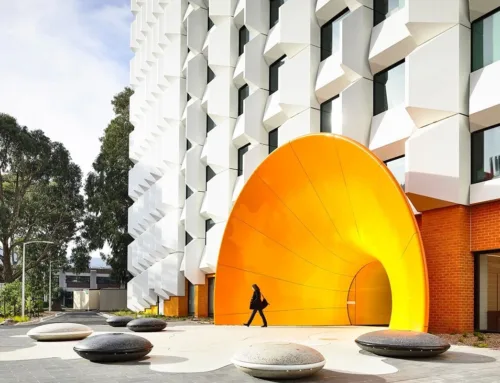
(images below are not of the panels used on the project)
Simple Ribbed Panels
Simple ribbed panels formed the majority of the façade envelope and were employed on the wing walls and the vertical surfaces of the tower elements. These ribbed panels typically consisted of a nominal 15mm thick face of GRC with hollow profiled ribs cast into the rear of the panel, arranged at different sizes, shapes, amounts and orientations based on design requirements. When designing these GRC elements, degrees of freedom needed to be taken into account since the cement-rich matrix and thin-walled nature of the products would react quickly to ambient temperature fluctuations, shrinking and expanding accordingly.
Stud Frame Panels
For the more complex central arch feature, stud frame GRC panels were required and cast in technically challenging geometric forms. These stud frame panels consisted of a single-skin GRC units sprayed down a nominal 15mm thick face with a supporting frame cast into the back, providing the structural capacity of the units. To support the dead load of the GRC panel skins, gravity anchors were positioned at the base of the units and interspersed at approximately 500mm centres in the X and Y vertices. Both the flex and gravity anchors were debonded from the GRC with the L anchor profiles pointing to the units’ centre, thus facilitating the thermal movements of the panel skins both off and on the cast-in anchor positions.
The apt use of GRC was coupled with Laing O’Rourke’s innovative approach of building modularised bathroom pods: 1,500 of which were assembled in a controlled factory environment and sent direct to site where they were installed at a rate of 38 per week.
This combination of innovative construction techniques helped facilitate a far expedited construction time – wrapping up the operation a whole 2 months ahead of schedule.
Got a Question About GRC?
From production equipment to raw materials, we’ve got the knowledge and expertise to answer your GRC enquiry

Photo Credit: Isabella Smith
Conclusion
This US$1.5 billion project ultimately opened in September in 2008 and has since become a landmark tourist destination and an iconic statement of Dubai’s place on the world stage.
The Atlantis Hotel construction stands as a testament of GRC’s ability to expedite the construction process of large-scale projects without having to make concessions on structural integrity, aesthetic excellence or overall longevity.
Producing these GRC elements can be made even easier with the help of the right equipment and materials. We’ve been involved in the GRC industry for over 50 years, supplying high-performance production equipment and raw materials to some of the industry’s top manufacturers so we know exactly what it takes to streamline your production processes.
Visit our websites or get in touch to learn how our specialist GRC production equipment and materials can transform your GRC manufacturing operations: